A Bird is Not a Stone

A Bird is not a Stone is a project I have been very much enjoying being part of,  a collection of poems by contemporary Palestinian writers, selected by the House of Poetry in al-Bireh, Palestine, and translated into Scots, Gaelic and English via a bridge translation by a selection of poets in Scotland. Other poets collaborating include Liz LochheadJohn GlendayKathleen Jamie, Billy LetfordJim Ferguson, Magi Gibson, and Ryan van Winkle, among others. The Arabic poems I have been working on have included works by Zuhair Abu ShaibMajid Abu GhoshTaher RivadhAbd al-Nasser SalehRania IrshaidSamih Faraj and Bisan Abu Khaled. The title is from a sculpture by George Wyllie.

***There is a current Kickstarter campaign to bring Palestinian poets to Scotland and to enable the book to be shared in schools, libraries and refugee communities in Palestine. Donations can be made here.***

A_BIRD_IS_NOT_A_STONE_DRAWING_Large_1991

Drawing of A Bird is Not a Stone, 1991, by George Wyllie.

I have always enjoyed hearing Arabic poetry read by friends from the Middle East, the rhythm and music of it was clear to me even while my understanding of the language faltered. This project has showed me just how intricate the wordplay in Arabic can be, with one word having many meanings. Wonderful titles and lines appeared in the bridge translation, challenging to improve upon, such as “Woman in a Garden/Thing That is Stared At” and “this insanity is full of olives” (Abd al-Nasser Saleh and Bisan Abu Khaled respectively). I envied some of the other Scottish poets, who could use all varieties of Scots, Glaswegian or Gaelic language to take ownership of the poems. It raised interesting questions for me, as to what my own voice is, poetically and personally. Born in London, and raised in Glasgow from the age of seven, with an Irish, Scottish, English and Welsh heritage, I am a true confused child of the British Isles. But so many of the poems I was working on covered, as good poems should, the universal themes of love, loneliness, identity, and altered consciousness, that there was always something I could find to identify with,  in a voice that grew more confident with each poem. The narrators in these poems get drunk, angry, fall in love, and challenge their own sense of homelessness, like poets and people everywhere. It was not just in the political, but in the personal, that I found a common language, and through translation of other poets’ work, a confidence in my own writing.

You can find out more about the project, and eventually buy the book, at: http://abirdisnotastone.wordpress.com/

I am very grateful to Henry Bell and Lorna MacBean for involving me in this wonderful opportunity. As my friend, the poet Gerry Loose says, “Translation, of anything, expands universes and verses of one’s own alike.”

Posted in Uncategorized | 1 Comment

If you want to sing out, sing out

Over the last year I have discovered the great joy of singing in harmony with others. My good friend Kirstie Penman sent a message out to all women of song she knew – which was many, as through her Listen In, Lights Out events, first in the Go Slow Cafe, and now in the Bungo, which raise money for the South Seeds project, she has showcased many singers and writers, and made many friends. She was long known on the music scene in Glasgow for her lovely voice and a cappella renditions of the folk and mining songs of her native Sunderland, taught to her by her grandfather, by all accounts a remarkable man. But now she wanted to add other voices to her own, and so began the band called Stone Tape. The name is Kirstie’s, partly in homage to an amazing 70s TV series, and has reference to the theory popular at that time, that ghosts were simply the imprint of  intense human emotions, often stirred by dramatic scenes such as a murder, upon the stone of the surrounding walls, which played back like a recording.

Stone Tape starring Michael Bryant and Jane Asher – with incredible Incidental music and sound effects provided by Desmond Briscoe of the BBC Radiophonic Workshop.

In our background singing we attempt to be as spooky as Desmond Briscoe’s sound effects and Sidney Sager‘s choral arrangements for another scary 1970s TV series, Children of the Stones. It was Kirstie who pointed out that research shows that singing in harmony can prolong your life. I believe it. Life has definitely improved, and it works on me like a type of meditation. It’s lovely to be back doing it again in the new year! My resolution for 2014? More harmony in my life!

Posted in Songs, Uncategorized | Tagged , | Leave a comment

tell it slant

Poetry bookshop – 134 Renfrew Street, Glasgow.A bookshop specialising in poetry in all forms and in all languages: printed, audio and visual, including pamphlets, rare, out-of-print, and second-hand. If you are a poet, spoken-word or visual artist or publisher with your own books/pamphlets/CDs or visual poetry objects, we will sell them for you! Commission negotiable. Come get yourself some shelf space! Official opening, with readings and wine, will be 6-9pm, Friday 13th December – but we are open from 10-2pm every day.

via tell it slant.

Posted in Events, Guerilla anti-consumerism, Poems, Publication, Uncategorized | 2 Comments

In a museum

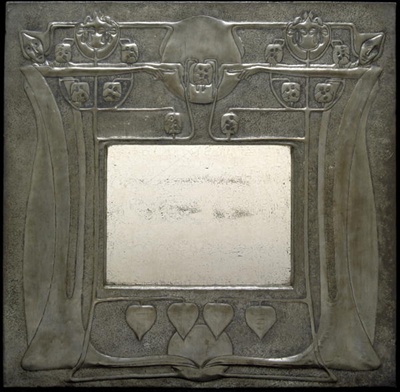
After the “Honesty Mirror” made by Frances MacDonald in 1896

worn with looking
the mirror is
behind glass

reflections absent
frame without picture
except the light

enclosed by
pewter plants and
women’s hands

fleshless figures
hung with cloth
of metal

tooled faces
long-fingered
maker’s hands

stylized honesty
seeds beneath
pale silvered skin

sexless figures
flowering
hair becoming stems

pointing
to a seed pod
against the sun

tasteless, scentless
untouchable
in beaten tin

the ageing, spotted glass
has a photograph’s
silvered grace

lean in and see
your father’s ghost
in a weathered window

Ellen McAteer

(from the Ekphrasis/Writing into Art project I was involved in this summer: more details, and poems by other poets, at: http://writingintoart.wordpress.com/)

I found the exercise interesting because at first what I was shown was what you see if you look this artwork up on the web – a photograph of a mirror! Hence, reflections absent. Artworks around mirrors and reflections, the absence/presence of the artist and the viewer/reader in the work, abound, like this one, “A Reflection of We” at Trongate 103, (Sophie-China Cabourn). Below that is a picture of the work I am writing about.

Tin, wood and glass 'Honesty Mirror', made by Frances Macdonald, Scottish, about 1896 </br> © CSG CIC

Posted in Uncategorized | Tagged , | Leave a comment

Alice goes Doune the Rabbit Hole again…

Ellen McAteerI’m very pleased to have been asked back to the Doune the Rabbit Hole festival again this year, this time for both poetry and songs. I’ll be singing some of my own songs on Sunday at the Fruitstand/Takeover stage with Paul Tasker of Doghouse Roses on guitar and Kirstie Penman, Flore de Hoog and Kristina Nivitslova of Stone Tape singing along. Hey, does that make us the Stone Roses? I’ll also be reading some work at the spoken word tent on Sunday. Times and stages can be found on my Gigs page, but knowing what happens to time in the Rabbit Hole, they can’t be guaranteed!

Posted in Events, Poems, Songs, Uncategorized | Leave a comment

#POP2

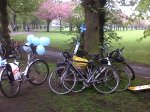
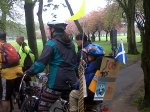
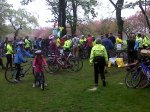
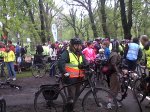
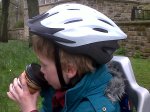
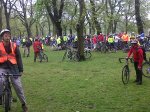
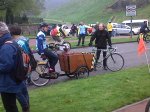
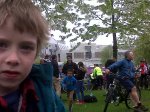
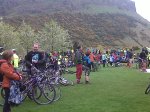
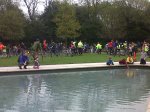
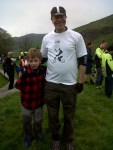
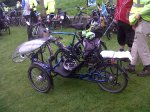
Mad family disruptions and hospital visits could not stop me and my son Charlie from attending the second Pedal on Parliament in Edinburgh. The same disruptions mean a long blog on this is not possible, but here instead is a photo diary! The ride was a great success, 4000 attended, and we had ministers and world-famous cyclists tweeting their support, and riding with us. It was a delightful day. http://pedalonparliament.org/

Posted in Uncategorized | 4 Comments

We used to build ships on the Clyde, now we build poets

The Clydebuilt 5 crew: left-right – Ellen McAteer, Mentor Sandy Hutchison, Mark Russell, Maggie Rabatski and Vicki Husband, at St Mungo’s Mirrorball at the Art Club.

The St Mungo’s Mirrorball Clydebuilt Poetry Apprenticeship Programme is an innovative mentoring scheme for new poets based in Glasgow, which has been successfully running for a number of years. It is run by the St Mungo’s Mirrorball poetry network, headed up by the activist poet-farmer and generous promoter that is Jim Carruth. Applications are through the Mirrorball network, which I joined a couple of years ago. I was on the scheme for a year, and am very grateful for it – it has opened a lot of doors for me. Our mentor was Alexander Hutchison. My fellow mentees included Maggie Rabatski, who is from the isle of Harris but has lived in Glasgow for many years. She has published two poetry pamphlets, ‘Down from The Dance’ and ‘Holding’, both with New Voices Press. Her poem ‘Sacrifice/Ìobairt’ is in the Scottish Poetry Library’s Top 20 Poems for 2012, and her ‘Holding’ has been shortlisted for the Callum MacDonald Memorial Award. She writes in Gaelic and English. Vicki Husband, the second mentee, is a graduate of the MLitt in Creative Writing from the University of Glasgow, who has had poems published in leading magazines across the UK. She has just been shortlisted for the Pighog Press/Poetry School pamphlet competition, and  co-runs a Poetry Book Group in Glasgow with Mark Russell, the third co-mentee, who last year had a poem shortlisted for the Bridport Prize. He also has an MLitt from the University of Glasgow, and is a teacher.

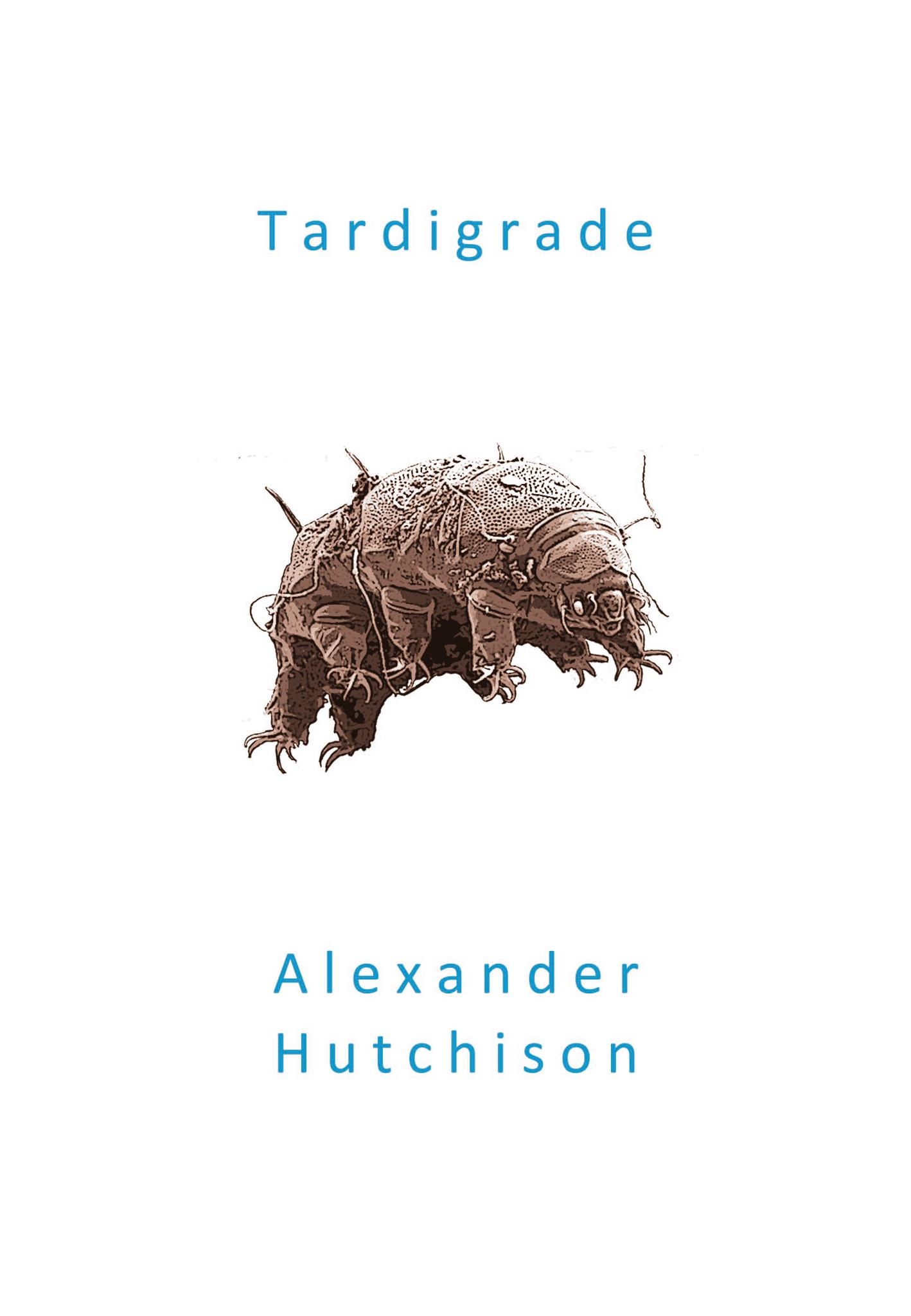
Last Thursday we launched Clydebuilt 5, with the debated name of Pole Star, a 1930’s Lighthouse ship, in the tradition of each group being named after a Clydebuilt ship. We also launched Sandy Hutchison’s long poem-pamphlet Tardigrade, published by Perjink Press.

Tardigrades (commonly known as waterbears or moss piglets) are small, water-dwelling, segmented animals with eight legs. They are polyextremophiles. (An organism that can thrive in a physically or geochemically extreme conditions) For example, Tardigrades can withstand temperatures from just above absolute zero to well above the boiling point of water, as well as pressures greater than any found in the deepest ocean trenches, along with solar radiation, gamma radiation, ionic radiation— at doses hundreds of times higher than would kill a person and have lived through the vacuum of outer space. They can go without food or water for nearly 120 years, drying out to the point where they are 3% or less water, only to rehydrate, forage, and reproduce. The lesson Sandy draws from this creature, in whose voice the poem speaks, is to slow down, advice he has given to me as an eager poet starting out, and which he repeated in the inscription to me in my copy. As the creature repeats at the end of the poem, taking on something of Sandy’s musical Buckie Scots, “what’s for ye will not go by ye”.

Tardigrade 2

Posted in Events, Uncategorized | Leave a comment

Found in Translation

I had an incredible time with Reel Festivals in the Poetry Club last night. This event was part of Reel Iraq, an ongoing festival throughout the UK marking 10 years since the invasion of Iraq. I have always loved to listen to the music and rhythm of Arabic poetry, and last night was a treat in that respect, with readings from Iraqi poets Ghareeb Iskander and Zahir Mousa, Kurdish poet Awezan Nouri, and Palestinian poet and St Mungo’s Mirrorball member Iyad Hayatleh, who translated his own poem. The startling images and powerful words of the Iraqi poets, including Sabreen Khadhim, who sadly could not be there last night due to visa issues, were given vivid new translations from Scottish poets John Glenday and William Letford, English poet and artist Jen Hadfield, and American poet Krystelle Bamford.

Also reading poems on the theme of Iraq, “Crossing Borders”, and “Bearing Witness”, were myself, JL Williams of the Scottish Poetry Library, Mr Mirrorball himself, Jim Carruth, and Professor Alan Riach. It was an honour to take part, and be in such starry company. I especially enjoyed Palestinian poet Iyad Hayatleh’s moving piece, and Jim Carruth’s works, rooted in his own land, were poignant against the background of so many displaced people. He read one which has really stayed with me, about two women taking down the “dry stane dyke” that marks a disputed border while the menfolk are away. But I think the poem which struck me most was Zahir Mousa’s wonderful images of a home without a family, and a family without a home, translated in striking beauty by William Letford, of which fortunately a recording has already been made:

I was amused to note the title of the night, “Found in Translation”, which is the title of a poem of mine written  to a Palestinian friend, and subsequently published in the anthology Tip Tap Flat. I was lucky enough to host the Reel festival crew a couple of years ago at the Scottish Writer’s Centre when I was events organiser there, and I don’t know if I stole the title of my poem from them, or whether it was happy coincidence, but I decided to read it last night, along with a poem about my own experiences of border crossings in Ireland, and a couple of poems inspired by the excellent eyewitness account of the war in Iraq by blogger Jo Wilding, who took a circus to Iraq in 2003, and subsequently put her experiences into a book called Don’t Shoot the Clowns, which was found for me by the excellent team at the Glasgow Women’s Library. As I still hope for publication one day for the other poems, I can’t share them here, so here is the first poem:

Found in Translation

“O! Look at the spider, knitting his net,” you cried,

getting the alliteration, but shaking the cobwebs

out of a language you feared you would never learn.

Oh, never learn! It was as if your eyes were rinsed to childish clarity

by tears you had wept while reading me poems of Palestine;

as if your mouth made pictures, bright in primary colours,

of things I had only seen in shades of Glasgow grey.

I can hear music in your voice though I struggle to understand the words

as you read me “Bitaqat huwiyya”, and the music of your language

leaks into mine, an Afro-Celt dance mix heard on the radio:

weaving webs of words linked not by sense but sound; a mother-tongue

that sounds like a mother, heard by a baby who cannot comprehend,

but feels the voice as blood in its ears, the fury, laughter, rhythm, rhyme,

and my heart strings sing to the call of migration,

and try to fly to a homeland which I have never seen.

* * * * * * * * * * * * * * * * * *

I was very grateful to Ryan Van Winkle, Reel Festival organiser, and Henry Bell of Fail Better for inviting me to the event, and also for the company of fellow Clydebuilt poet Vicki Husband and Mirrorballer Katherine Sowerby for drinks in the 78 afterwards!

Looking forward to seeing more of the poems from last night on the website: http://www.reelfestivals.org/reel-works/

Posted in Events, Poems, Uncategorized | Tagged , , , , , , , , , , , , , , , , , , | 1 Comment

Writing into Art

I really enjoyed our first pre-workshop at the Kelvingrove Art Gallery on Saturday for an upcoming conference at the University of Strathclyde on Ekphrasis, which I have been practising for a while without knowing it had a name! The gaps in my knowledge continue to embarrass me, curses of a liberal education…

The conference, Writing into Artis aimed at poets and writers in general interested in ekphrasis and at visual artists whose work involves the use of text.  Poets from the Clydebuilt poetry scheme were invited to attend a practice-based workshop led by American poet Cole Swensen, that will elicit responses to the collections at Kelvingrove Museum and Art Gallery.

Ekphrasis is the graphic, often dramatic, description of a visual work of art. The word comes from the Greek ek – ‘out’ and phrasis – ‘speak’,  to proclaim or call an inanimate object by name. Originally it referred to a description of any thing, person, or experience. It has more recently (i.e. in the 19th Century!) been limited to visual arts, though the American Poetry Foundation includes “a scene” in its definition, which leads one on to film and performance, as one of my fellow Clydebuilt poets, Christie Williamson, who frequently writes about both of those, pointed out. I also thought of landscape and nature poetry, and of the recent scheme where Clydebuilt poets wrote about music in the Glasgow Jazz Festival.

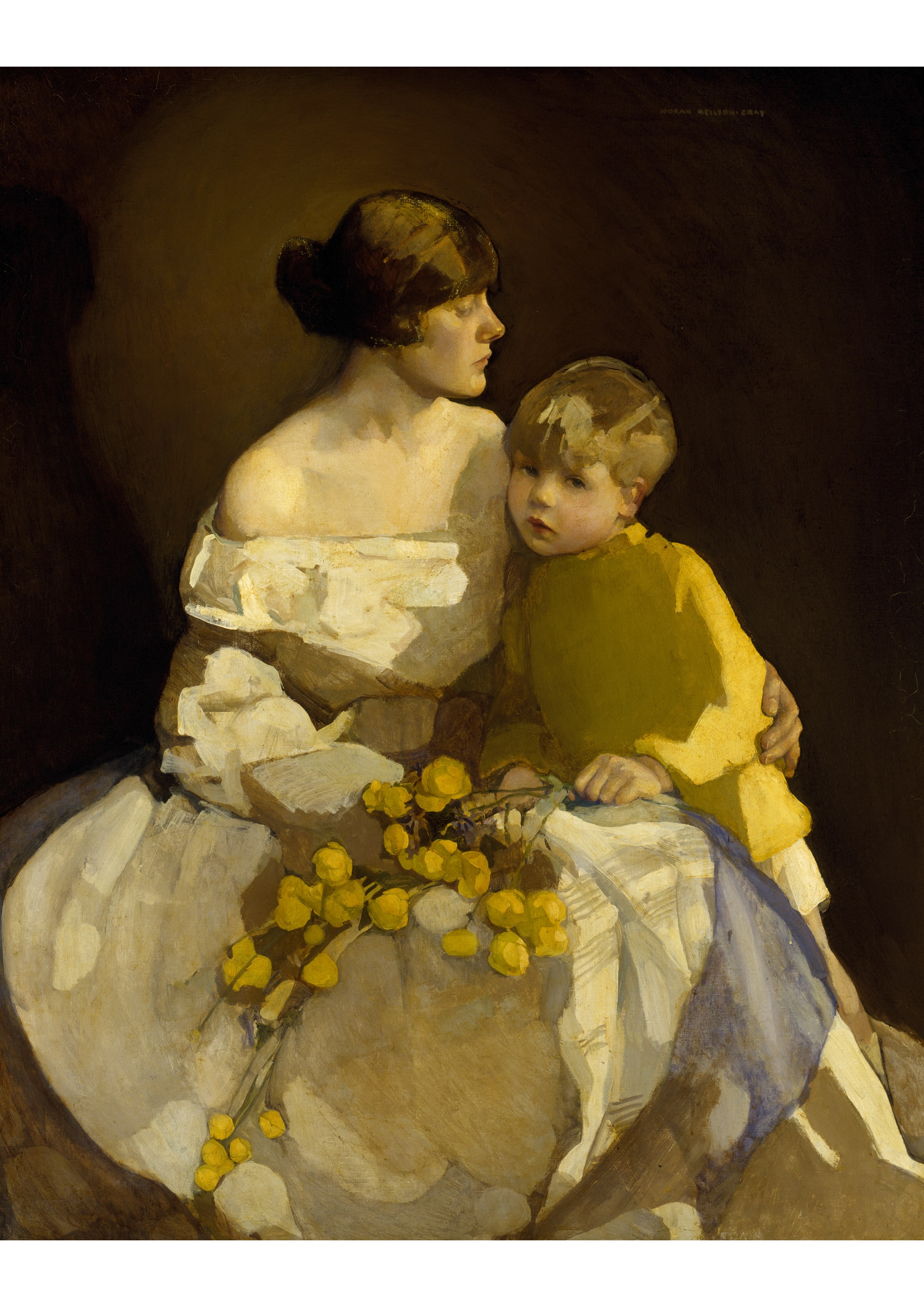
Little Brother by Norah Neilston Gray

Little Brother by Norah Neilston Gray

The traditional view of Ekphrasis as the process of giving a voice in text to a “mute” art object, as given in the excellent discussion lead by poet and academic David Kinloch, who is organising the conference, comes up against difficulty in contemporary art which can include performance art, video installations, and the use of voice, music and text in art. The relationship between literature and the visual arts is an interesting one, which I live daily, writing and working at the Glasgow School of Art. The Romantic and Modernist poets made much use of Ekphrasis in that more traditional meaning, as shown in the Guardian’s collection of Ekphrastic poetry, which includes “In the Musée des Beaux Arts” by WH Auden“Landscape with the Fall of Icarus” by William Carlos Williams, and “Ode on a Grecian Urn” by John Keats, to say nothing of Homer’s Iliad, which describes the shield of Achilles. But of course both poetry and art have moved on, as is recognised by the conference organisers.

Notwithstanding debate on the meaning of the genre, and how to practice it, David Kinloch moved us on with two excellent examples, one of Ekphrasis and one of almost anti-Ekphrasis, namely A Cornfield with Cypresses by Paul Durcan and Why I am not a Painter by Frank O’Hara respectively. He then directed us at photographs on the table of works of art within Kelvingrove that were chosen by the museum staff. All were of a more traditional nature, as befits a museum built in the 1900s, though ultimately we are not limited to those for a subject. I was amused to be presented with a mirror from the Museum’s Mackintosh Collection, designed by Frances Macdonald in 1896, and nicknamed “The Honesty Mirror” trust me to have come from the Art School, keeper of Mackintosh’s most famous building and a pretty good collection of our own, to be presented with that. Still, chance sometimes has to be taken on with an open mind, and of course the title alone is evocative, the object is beautiful, and it was intriguing to be handed a photograph of it, which of course, unlike the object itself, did not reflect the poet! Let’s see if this poet can keep herself and her reflections out of a work about it.

Image

Mirror, known as the ‘Honesty Mirror’, c.1896 (tin, wood, & glass), Macdonald, Frances (1874-1921) / Art Gallery and Museum, Kelvingrove, Glasgow, Scotland / The Bridgeman Art Library

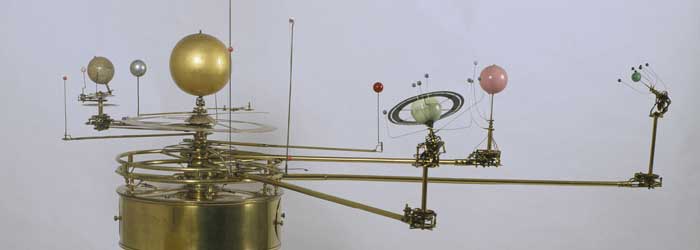
We were then guided around some of the other objects, including many beautiful paintings, and Fulton’s wonderful orrery, (a three-dimensional model of the solar system designed and built 1823-33), which intriguingly puts scientific objects on a par with art for the purposes of Ekphrasis in this context. Released, it was liberating to roam free around the museum without being lead by my kids’ excited magpie minds, and amusing to run across other poets periodically, examining paintings excessivley and giving a nod of recognition across the gallery, like something out of a John le Carré novel. Above all, it was wonderful to meet up again with so many other Clydebuilt poets outside Mirrorball, especially Vicki Husband and Maggie Rabatski from my Clydebuilt 5 crew, and enjoy the kind of opportunities that follow on from this wonderful scheme. I’m very grateful for this opportunity, not least for giving me deadlines and subjects for writing again. Come along to the conference and see the results! http://writingintoart.wordpress.com/

Fulton's Orrery

Fulton’s Orrery at the Kelvingrove Museum (photo: Glasgow Life)

Posted in Guerilla anti-consumerism, Poems | Tagged , , , , , , , , , , , , , , , , , , | 2 Comments

Ik ben een jonge Schotse dichter!

I have been very excited about the translation of one of my poems into Dutch for the magazine Awater, the largest literary magazine in the Netherlands, alongside three poets featured in the Scottish Poetry Library‘s Best Scottish Poems 2011,  Jen HadfieldJL Williams, and Charlotte Runcie. I’m very flattered to be placed in such intelligent and talented company. The translator is Susan Ridder, who has translated prose, poetry and non-fiction for a range of literary magazines, and has also done translations for the Stedelijk Museum ‘s Hertogenbosch, Monali Meher, Philip Stromberg, and Movies that Matter. A week ago, the magazine dropped through my door, and imagine my delight as Mat and I struggled to puzzle out the surrounding article in our tourist Dutch, to find the featured poets described as “vier jonge, Schotse dichters” – four young Scottish poets! That’s a nice thing to read just after your 40th birthday.
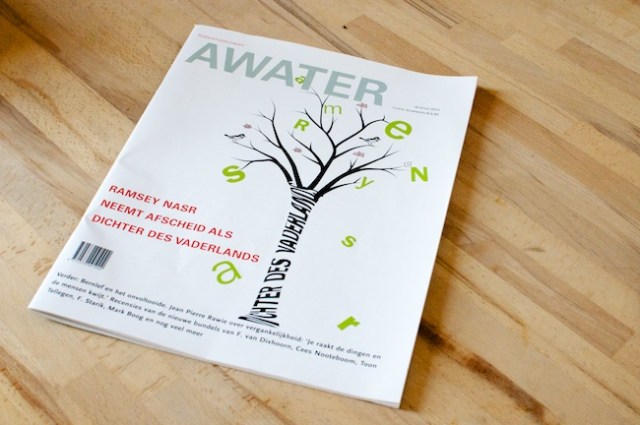
Awatermag

Photo (c) Charlotte Runcie: http://www.toadandfeather.com/

There is nothing like seeing your poem in another language – though the poet in me was of course nervous at the lack of control over words used, for example “kwikzilveren” for mercury. But the whole point of writing is that once you have let the thing out of the door, its meaning and message is the property of its readers, if you are lucky enough to get any. And it is quite something that you will have intelligent readers in another country, who unlike me will have the knowledge of both languages to compare the two versions, if they want to. All I can do is enjoy the music of the sounds of my poem in this language, which certainly seems to evoke the landscape it’s meant to describe. The full poem in Dutch is below. You can read the English version here. The poem was originally published in New Writing Scotland 29.

Rouw in Arduaine

Een koel kwikzilveren licht,
Water dat de hemel naar de zee trekt,
Dat zachte grijze mededogen
Van water en steen.

Shuna, grillig en klein
Weerspiegeld, met variaties,
In Luing.
Seil een vage liefdevolle schaduw
Die alle twee omarmt.

Elk van dezelfde steen
En niet helemaal passend
Als kapotte puzzelstukjes
Als familie.

Elk een eiland
Dat bij zichzelf blijft
Maar onderdeel is van een archipel.

Zelfs wanneer de regen
Je wegtrekt van de horizon
Weet ik dat je er bent:
Ik voel de vorm van je oevers
Door de stromingen die de mijne vinden.

Ellen McAteer

Oorspronkelijke titel: Mourning in Arduaine, gepubliceerd in New Writing Scotland, 29 (2011) Translation: Susan Ridder for Awater.

Below,  for anyone who’s really interested, is the English translation of the full article by Susan herself, with the four poems in the original. A lovely article, though the time taken to publish it, plus translation, means there are a few inveracities – for example, I am now one of last year’s Clydebuilt cohort, though we are reading this year at Mirrorball (April 18th at the Art Club). Also, for the record, it was a 1969 VW Campervan we got stuck in the mud in, not a car, and one complete with bed and kettle, so not too much hardship to wait overnight, and of course I felt suitably philosophical in the morning! We got stuck there in the dark, so the view in the morning was a revelation, and the poem came quite easily for once. It can be good to be forced to stay still, when you’re as hectic as me. My 40th birthday was spent with my man and two boys in the beautiful village of Crail on the Fife Coast, and immobilised by flu. Here’s hoping for a similar level of literary output from that!

Rain, Riddles and Metamorphoses (Awater, Winter 2013)

Susan Ridder has lived in Scotland for several years and still visits regularly. She’s translated four fascinating young Scottish poets for Awater. This is the Dutch premiere of their work.

According to Dorothy McMillan, Honorary Senior Research Fellow English Literature of the University of Glasgow and editor of, amongst others, Modern Scottish Women Poets (Canongate, 2003), Scotland is a good place to write poetry, whether you’re Scottish or not, but not such a good place to get it published. There are a number of small independent publishers in Scotland with an impressive poetry list, including diehard publishers, Luath Press and Mariscat Press, but the most important poetry publishers, like Carcanet Press and Bloodaxe, are based in England. The largest Scottish publishing house, Canongate, stopped publishing poetry several years ago. However, a considerable number of pamphlets (comparable to Dutch chapbooks) are published in Scotland, for instance by HappenStance Press, Calder Wood Press and Red Squirrel Press, and there are countless poetry events, readings, poetry slams and poetry competitions.

As there is no obvious source on contemporary Scottish poetry and most books and articles are about the big names, I started my search for contemporary work on the website of the Scottish Poetry Library (www.scottishpoetrylibrary.org.uk), a unique poetry library in Edinburgh, whose staff specialise in the promotion of poetry, particularly Scottish poetry. The SPL’s extensive website is a treasure trove of information about Scottish poets and their work, including a list of the twenty best Scottish poems of 2011, compiled by Scottish poet Roddy Lumsden. (Every year the list is drawn up by a different person.) Based on this list, I chose the following poems for translation: ‘Staying In’ by Charlotte Runcie, ‘Taboo’ by Jen Hadfield, ‘Imago’ by J.L. Williams and ‘Mourning in Aruduaine’ by Ellen McAteer. The first three poems are on the list, Ellen’s work I knew before I went looking for the other poems.

Once I’d chosen my poems, I realised that all four have been written by young women, at different stages in their careers. The youngest poet is Charlotte Runcie, who graduated from the University of Cambridge last year and now lives in Edinburgh. She was the Foyle Young Poet of the Year 2006, a prize awarded by the Poetry Society, and winner of the Christopher Tower Poetry Prize 2007. Her poems have been published in a number of literary magazines, with ‘Staying In’ featuring in the prestigious The Salt Book of Younger Poets (London, Salt, 2011). Right now, Charlotte works for a cultural magazine and she writes about the culture of poetry in performance (which, she says, probably doesn’t leave her enough time to write her own poetry.)

            Ellen McAteer is a poet and song writer working for the Glasgow School of Art. She took part in the Clydebuilt Verse Apprenticeship Scheme, where her mentor was poet Alexander Hutchison, and this year she is one of the St Mungo Mirrorball/Glasgow Life ‘Clydebuilt Poets’. She’s been a member of the Scottish poet Donny O’Rourke‘s Poetry Group and a director of the Scottish Writers’ Centre. Her experience is that the poetry scenes in Glasgow and Edinburgh are quite separate, although every once in a while they are united by the Scottish Poetry Library. Ellen’s poems have been published in magazines like New Writing Scotland, Gutter and Aesthetica and in the anthology Tip Tap Flat: A View of Glasgow.

The most well-known of the four poets is Jen Hadfield, who already has two poetry collections to her name, published by Bloodaxe, one of the most important British publishers of poetry today. Like Charlotte Runcie, she has been awarded several prizes, including the TS Eliot Prize 2008 (for her second collection Nigh-No-Place). And, like her colleague JL Williams, she did the MLitt in Creative Writing at the University of Glasgow. Although now based in Shetland, she grew up in Cheshire, England, and has many relatives in Canada. As a result of her international background, her work is often influenced by the contradictions of travelling and being at home, and the importance of place and country.

            JL (Jennifer) Williams also isn’t Scottish by birth, she’s from New Jersey, but like Charlotte Runcie, she now lives in Edinburgh. She is Programme Manager for the Scottish Poetry Library and her work has been published in magazines like Poetry Wales, The Wolf, Shearsman, Fulcrum and Stand. In 2009 she travelled to the Eolean Islands with a travel bursary from the Scottish Arts Trust. There she wrote ‘Imago’, which was published as part of her collection Condition of Fire (Shearsman Books, 2011).

What appeals to me in the poems I translated is that all four are very visual, but at the same time have something mysterious. Charlotte Runcie’s poem was written on a rainy afternoon in Cambridge, but the image of a rainy reality has been overlaid with a dream image of Edinburgh in the snow. When Charlotte wrote the poem, she was still a student, working on a dissertation about Romantic sonnets, a form that fascinated her. She discovered that it can be very useful when balancing the concrete and the abstract, and to overlay multiple images. She says the sonnet also reflects her image of Edinburgh on New Year’s Eve – a city with stark architecture that contrast strongly with the fire works, unpredictable weather and somewhat sad drunkenness of many of its citizens on that night. The poem was meant as a window through which you can see Edinburgh in the distance, as she saw the city when she lived in England.

Jen Hadfield’s poem is about hares in the snow, but it was written as a riddle: the reader has to guess the animal referred to. As she herself says, she is currently particularly interested in riddles and the parallels between the old Shetland riddle game called ‘guddicks’ and the reader’s fear of not ‘getting’ a poem. She often doesn’t understand riddles herself, and she still worries about understanding poems, so she doesn’t want her own poems to be ‘difficult’, she’d rather communicate. However, when she attempted to simplify her poem ‘Taboo’, the rhythm became flawed and the life seeped out of it.

What is striking about Ellen McAteer’s poem, I think, is how beautifully she describes a – to me quite familiar – landscape, that of the Scottish west coast, and how the poem conveys her grief at the loss of her father. The poem is about coping with that grief, in which the poet doesn’t believe in life after death, but rather in the idea that her father’s life continues to influence that of her and her family, even though she cannot see him anymore. The poem is also about the fragmentation of families. Ellen’s inspiration for this poem came when she and her partner were stuck in the mud in their car one night, after a picnic. As they had to wait until someone could come and help them the following day, they decided they might as well go to sleep. When they woke, they were treated to the most stunning sea view ever.

JL Williams’ poem conveys something intangible through its title and first stanza, which refer to the last stage in the life of an insect, after its metamorphosis. Williams then links this metamorphosis to the creation of heaven and earth as imagined by Ovid. The poem was written when, during her Masters in Creative Writing, she and writer Elinor Brown made an attempt to write their own version of Ovid’s Metamorphoses. That version never really worked out, but Williams remained interested in Ovid’s stories about transformation, an interest that became the basis for her application for the Edwin Morgan Travel Bursary. With that bursary she travelled to Salina, one of the Eolean Islands near Sicily, where she wrote the poems that were published in Condition of Fire, one of which is ‘Imago’.

With many thanks to Lizzie MacGregor of the Scottish Poetry Library, Dorothy McMillan, Ellen McAteer, Charlotte Runcie, Jen Hadfield and JL Williams.

Staying In

I watch the city shrug its clothes back on.
An appaloosa spatter gathers scent
that hits the brain the way it hits a lawn:
it quenches, hard as mint. I think it meant
to come inside, but only leaves a note
in droplets on the door; at Hogmanay
it settles in the lungs and in the throat
and whispers too a hush of seaside spray
that sweeps below the ribs and keeps its snow
flakes back from hopeful tongues. I’m breathing when
the rainsmell pours my throat a dram, and so
I open up the window wider, stand again
here in our cloud and wincing, hats and boots,
a pearlish weeping reaching for the roots.

Charlotte Runcie

from The Salt Book of Younger Poets, edited by Roddy Lumsden & Eloise Stonborough (London: Salt, 2011)


Mourning in Arduaine
A cool mercury light,
Water pulling sky to sea,
That soft grey sympathy
Of water and stone.

Shuna, small and jagged,
Echoed, with variations,
By Luing.
Seil a faint fond shadow
Embracing them both.

Each made of the same stone
And not quite fitting
Like broken jigsaw pieces
Like family.

Each an island
Holding to itself
But part of an archipelago.

Even when the rain
Tears you from the horizon
I know you are there:
I can feel the shape of your shores
Through the currents that reach mine.

Ellen McAteer

published in New Writing Scotland, 29 (2011)

Taboo
You want to look on the lea-side
in winter, the swamp thickening
like the uterine wall,
popping its puffballs
and creaming its butterwort,
folding in the sundew and squill,
putting out the eyebrights.

You ask what they do
for accommodation –
try high pools
in the red hills
of winter,
hind-paws slapping up flares
of red rain –
look for their niche
of collapsing peat.

Pilgrims of such
an ascetic order
don’t even own
the spectral colours
of snow.

No, that’s the white flag
at Amen Corner.

That’s your heart going
nineteen-
to-the-dozen.

That’s just the cold water
stilling itself
in the form
of your throat.

Jen Hadfield
published in Edinburgh Review, 133  (2011)

Imago

He thought of so many ways to make this
(veined wing, weightless thing),
walked in nothingness dreaming.

Gathered and tossed stars like coins or
(gold, glass)
marbles.

The stars weren’t anything.

He decided to separate first
earth sky sea land heaven air
(heavy earth, light heaven),
let them find their places
in and round the world.

How he enjoyed the splashing sound
(azure, periwinkle, emerald, cobalt, violet, cornflower, blue)
that snaked and pooled and froze, in places, rose.

The winds, his children, he banished each to their rooms.

The sea made fish, the air birds, the heavens gods, the land beasts
and man was moulded by Prometheus, who found in mud
flakes of scattered stars, and wetting them in rivers shaped
creatures with eyes looking upwards, who walked dreaming.

JL Williams

from Condition of Fire (Exeter: Shearsman Books, 2011)

Posted in Poems, Publication, Uncategorized | Tagged , , , , , , , , , , , , , , | 4 Comments